Workshops
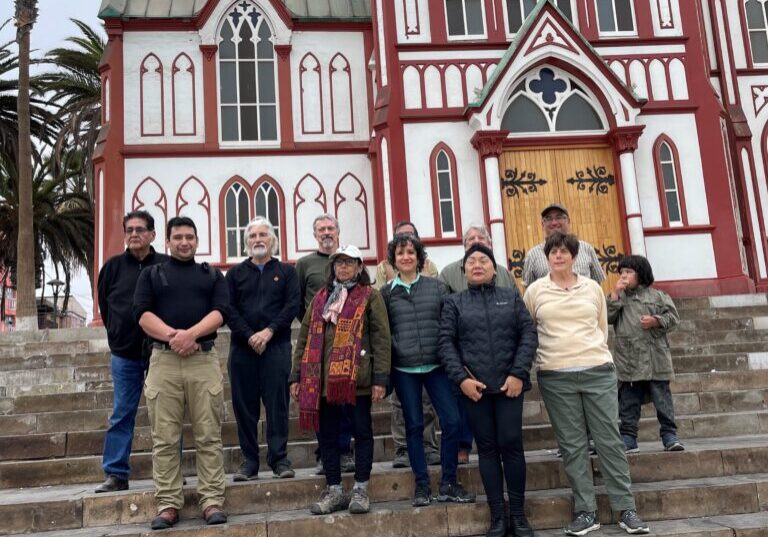
Arica, Chile (2023)
The workshop aimed to provide an opportunity for these researchers to discuss the social relationships between camelids and humans and the evolutionary history of camelids in light of the recent surge in ancient genetic research.
Although the north coast of Chile was not a focal point of camelid domestication or rearing, Arica was an ideal venue for the workshop due to the ease of travel accessibility and the local assistance of Chilean archaeologists, Daniela Valenzuela and Calogero Santoro of the University of Tarapaca. In addition to Valenzuela and Santoro, the participants included David Trigo and Jose Capriles (Bolivia), Axel Nielsen and Hugo Yaccobaccio (Argentina), and Victor Vazquez and Teresa Rosales Tham (Peru).
The topical and geographic scope of the workshop presentations was broad and the presentations integrated multiple types of archaeological, ethnographic, experimental, and visual data. Among the topics that participants explored was domestic camelid breed size variability and morphotypes, changes in herd composition following Spanish colonization, ritual landscapes and the political mobilization of herders, the many uses of camelid material culture in the economies of non-pastoralists, the dynamic ritual function of camelids as non-human persons revealed in iconography, the transformation of camelid bones into bone tools. The eight data-rich articles published in Chungara Revista de Antropología Chilena demonstrate the creative and innovative research that Andean scholars are undertaking related to humans and camelids. These studies will inspire others to address new avenues of research.
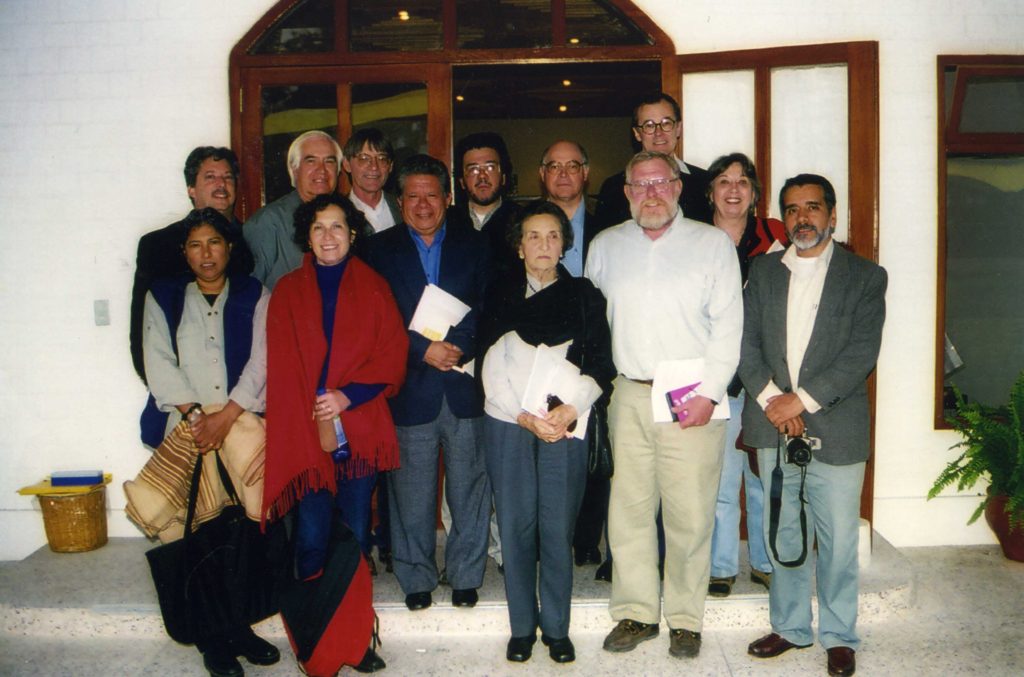
Purmamarca, Argentina (2004)
In 2004, Heather Lechtman led a workshop with the purpose of synthesizing data on the histories of interregional connectivity in the south-central Andes. Scholars from Argentina, Bolivia, Chile and the US gathered to discuss the character of interaction spheres in the south-central Andes before and during the Middle Horizon. The conference resulted in the publication of an edited volume in 2006 (see publications).
Cajamarca, Peru (Aug. 28-30, 2000)
Ana María Lorandi led our first workshop, "La arqueología y la etnohistoria: un encuentro andino," on August 28-30, 2000 in Laguna Seca, Cajamarca, Peru. The workshop united archaeologists and ethnohistorians from five South American countries (Ecuador, Peru, Bolivia, Chile, and Argentina) with the purpose of integrating archaeological and historical perspectives on the Inka, and included discussions about myths and cosmology, ethnicity and identity, and the frontiers of the empire.
The workshop proceedings, by the same name were edited by John R. Topic, and published in 2009 (see publications). Papers included those by Segundo Moreno, Ecuador, Lorenzo Huertas Peru, Sonia Alconini, Bolivia, Jorge Hidalgo and Calogero Santoro, Chile and Ana Maria Lorandi and Veronica Williams, Argentina. Maria Rostworowski provided a summary commentary. Discussions following each paper were also transcribed and included in the publication.
The Interrelationships of New World Cultures Program, Costa Rica (1958)
“A conference of several days duration at which type samples and tentative conclusions are to be presented and discussed with a view to a series of comprehensive and integrated publications” (Mason 1967).
Viking Fund Conference, New York (1947)
“In July of 1947 the Viking Fund underwrote the cost of a two-day conference held at its headquarters in New York under the joint auspices of the Fund and the Institute of Andean Research. Many important papers on Peruvian archaeology by participants in the program were given at the conference. With the aid of a grant from the Viking Fund these were published as a joint publication of the Institute and the Society for American Archaeology: Bennett, Wendell C., Editor. 1948. A Reappraisal of Peruvian Archaeology, Memoirs of the Society for American Archaeology, No. 4, Menasha” (Mason 1967).